How I taught my students to write
• 20 April 2026 •
Every post has a story. This one starts a few years ago, when I was still in Barcelona. At the time, I was wondering how to help my grad students improve their writing skills, especially for fellowship applications with few results to speak of.
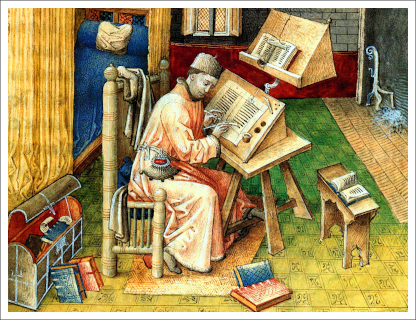 So I set out to create a small mental map with the idea that I would be able to share it with my students. I wrote down some ideas and made a draft post that just sat there... and along came ChatGPT.
And now everybody is a good writer.
Time has finally come to end a long silence on the blog, and I thought that this post would give me the occasion to make a point. There are some things that only you can do, like dreaming, suffering, liking etc. Having someone else do it for you simply makes no sense.
There is more to writing than producing a text. Somewhere in the middle of it, there is a part that only you can do. It is a piece of you. It’s because of this...

 When I established my lab and started to recruit people, I thought that it would be interesting to gather some information about what makes a good or a bad scientist. To this end, I designed a short questionnaire with eight questions. There was no right or wrong, nor even a preferred answer. Those were just questions to help me know the candidates better.
 Scientific models are more of an art than a science. It is much easier to recognize a good scientific model than to make one of our own. Like for an art, the best way to learn is to look at the work from the masters and take inspiration from them. One of the crown jewels of modern science is undoubtedly Darwin’s Theory of Evolution. I recently realized that I had no idea how Darwin stood against creationism and how he defended his view in regard of the doxa of his time. Digging into this topic turned out to be one the most important lessons I learned about the scientific method... and the lack of it.